Source Car Trim Removal Tool for Auto Body Repair, Fastener Removal, and Panel Installation
Compare 30 Car Trim Removal Tool options from verified suppliers. Buyers can select from various piece counts and materials like plastic or nylon for universal automotive repair applications.
Key considerations
Products List
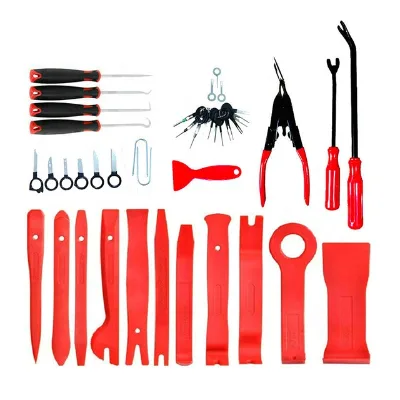


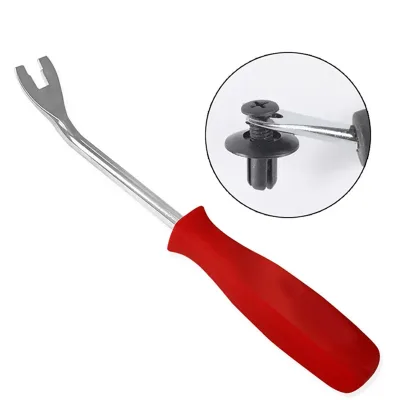
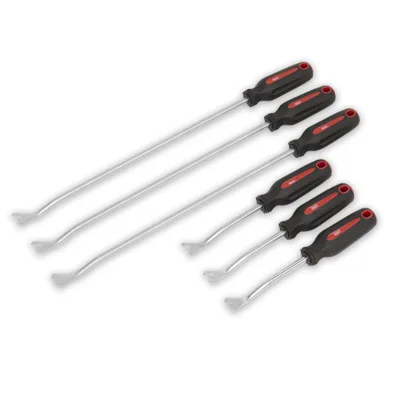
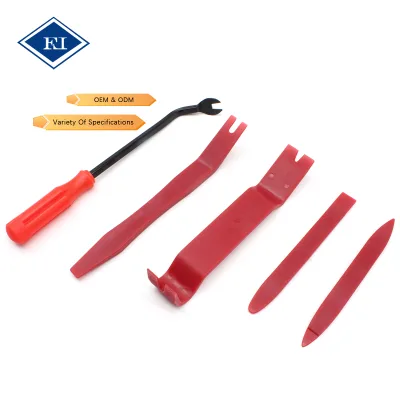
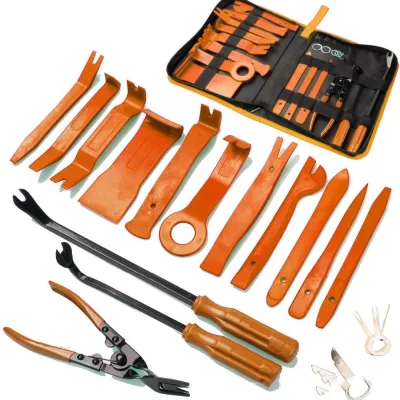


19PC Car Trim Pry Bar Molding Panel Door Dash Interior Clip Removal Tool
$1.00 - $10.00
MOQ: 1000 Pieces


27PC Car Auto Body Moulding Door Panel Trim Clip Removal Pry Bar Tool Remover
$1.00 - $10.00
MOQ: 1000 Pieces

12PC Car Auto Pry Bar Moulding Door Trim Clip Remover Panel Removal Tools
$1.00 - $10.00
MOQ: 1000 Pieces


Comprehensive Sourcing Guide
Strategic Sourcing Guide for Automotive Trim Removal Tools
The automotive aftermarket and professional repair sectors rely heavily on specialized hand tools to maintain vehicle aesthetics and structural integrity without causing damage. Among these, the Car Trim Removal Tool represents a critical category for mechanics, body shops, and fleet maintenance teams. Sourcing these tools requires a disciplined approach that balances technical specifications, material composition, and supplier reliability. This guide synthesizes available market data to provide a framework for procurement professionals seeking high-quality trim removal kits. The focus remains on evidence-based attributes observed in current listings, ensuring that decisions are grounded in verifiable product characteristics rather than speculative claims.
Technical Specifications and Material Composition
Understanding the physical attributes of trim removal tools is the first step in defining procurement requirements. The core function of these tools is to pry, clip, and separate automotive fasteners and trim panels without marring the surrounding surfaces. Based on observed product data, the primary materials utilized in this category are plastic and nylon. These materials are selected specifically for their non-marring properties, which are essential when working with delicate interior finishes, dashboards, and exterior body panels. Some product listings indicate a composite standard of "Nylon+metal," suggesting that certain tools within a set may incorporate metal reinforcement for leverage points while maintaining plastic contact surfaces.
The dimensional specifications of these kits vary significantly to accommodate different repair scenarios. The number of pieces in a set is a primary differentiator, with observed configurations ranging from 12 pieces to as many as 44 pieces. Common configurations include 19pcs, 22pcs, 25pcs, 30pcs, 31pcs, 32pcs, 35pcs, 38pcs, 41pcs, 40pcs, 44pcs, 42pcs, 36pcs, 33pcs, 43pcs, 39pcs, and 14pcs. This variability implies that buyers must align their order quantity with the specific complexity of the repairs they perform. A basic kit of 12 or 14 pieces may suffice for general fastener removal, whereas a comprehensive 44-piece set is likely designed for extensive body shop operations requiring a wide array of tool shapes and sizes.
Color coding is another observable specification, with tools frequently appearing in blue, red, and black variations. While color does not inherently dictate performance, it often serves as an organizational aid within a kit or a brand identifier. The physical dimensions of the tools themselves are often described as "selectable," indicating that manufacturers may offer different sizes within the same product line to fit various fastener types. The standard packaging dimensions observed in some listings are 404020, which provides a baseline for logistics planning and storage requirements.
Functional Applications and Operational Scope
The application of car trim removal tools is strictly defined within the automotive repair domain. These tools are explicitly categorized for "Auto Repair Set" and "Automotive Repair Tools" usage. Their primary function is to facilitate the repair of used vehicles and the removal of automobile plastic fasteners. The versatility of these tools is highlighted by their designation as "Universal Parts," meaning they are designed to be compatible with a wide range of auto brands rather than being proprietary to a single manufacturer. This universality is a key value proposition for suppliers serving independent repair shops that handle diverse vehicle makes and models.
The operational scope extends beyond simple removal. The tools are engineered for "Easy Operation," a feature that reduces the physical strain on technicians and minimizes the risk of user error. The "Update Method" for these tools is noted as "by Internet," which may suggest that manufacturers provide digital resources, such as application guides or compatibility charts, to assist users in selecting the correct tool for specific fastener types. The tools are classified under "Type1: Auto Body Repair Tool" and "Type: Hand Tool Sets," confirming their role as manual implements rather than powered machinery.
The specific usage scenarios include "Reapiring Car" (repairing cars) and handling "Car Fasteners." The tools are designed to interact with "Automobile Plastic Fastener" systems, which are ubiquitous in modern vehicle construction for attaching interior panels, door cards, and exterior trim. The ability to handle these fasteners without breaking them or damaging the underlying substrate is the primary performance metric for success in this category.
Compliance, Certification, and Quality Standards
In the B2B procurement of automotive tools, compliance and certification serve as proxies for quality assurance. The supply chain for these tools often originates from specific manufacturing hubs, with "China" and "Hebei" identified as key places of origin. While geographic origin provides context for supply chain logistics, it does not inherently guarantee quality. Therefore, buyers must look for verifiable certifications. The observed data includes "ISO" certification, which indicates that the manufacturing facility adheres to international management system standards. This is a critical checkpoint for buyers seeking suppliers with established quality control processes.
Beyond ISO, the products are described as meeting "Standard" specifications. However, the term "Standard" is generic and requires further verification. Buyers should request specific technical data sheets that define the exact standards met, such as material hardness ratings or tensile strength limits for the nylon and plastic components. The "prod_standard" field sometimes lists "Nylon+metal," which serves as a material standard but lacks the precision of a formal industry standard number.
The condition of the tools is consistently listed as "New," ensuring that buyers receive fresh inventory rather than refurbished or used goods. The "Customization" and "OEM" (Original Equipment Manufacturer) support are available, allowing buyers to request branding or specific modifications. This flexibility is valuable for distributors who wish to create private-label products. However, buyers must verify that any customization does not compromise the structural integrity or material composition required for safe operation.
Cost Drivers and Procurement Parameters
The pricing and minimum order quantity (MOQ) for car trim removal tools exhibit significant variance, reflecting the diversity of the market. The observed price range spans from $0.10 to $30,000 USD. This wide spectrum suggests that the lower end represents individual tools or small sets, while the upper end likely includes large-scale industrial orders, complete workshop setups, or highly specialized kits. The MOQ range is equally broad, extending from 1 set to 5,000 units.
Several factors drive these cost variations. First, the number of pieces in the kit is a primary cost driver. A 12-piece set will naturally cost less than a 44-piece set due to the volume of material and manufacturing time required. Second, the material composition influences price; kits with metal reinforcement or higher-grade nylon may command a premium over basic plastic sets. Third, customization options, such as OEM branding or specific packaging requirements, add to the unit cost.
Buyers must carefully evaluate their volume needs against the MOQ constraints. While some suppliers offer an MOQ of 1 set, allowing for small-scale testing or immediate fulfillment, others require orders of 100 pieces or more. The "Selling Units" are typically listed as "Single item," but bulk purchasing often yields better unit economics. The "Delivery Time" is observed to be between 7 and 15 days, which is a critical factor for supply chain planning. Buyers should confirm if this lead time includes production time or if it applies only to shipping from stock.
Supplier Evaluation and Packaging Logistics
Selecting the right supplier involves more than just comparing price and MOQ. The packaging and logistics capabilities of the supplier are essential for ensuring that tools arrive in good condition. The observed packaging types include "Carton," "Carton Packing," and "Neutral Packing." The choice of packaging impacts the protection of the tools during transit and the ease of storage at the destination. A "Carton" is generally preferred for bulk shipments as it offers robust protection against crushing and moisture.
The "Tire Gauges Carry Way" is listed as "Portable," which, while seemingly specific to tire gauges, indicates a broader design philosophy of portability within the product line. This suggests that the trim removal tools are likely designed with carrying cases or bags that facilitate easy transport to different job sites. The "prod_packing" of "19pcs/bag" indicates that some sets are organized in bags rather than rigid boxes, which can reduce shipping volume and cost but may offer less protection against environmental factors.
When evaluating suppliers, buyers should verify the "Place of Origin" details. While "China" and "Hebei" are common origins, specific factory locations can influence lead times and communication efficiency. Suppliers offering "OEM" and "ODM" support demonstrate a higher level of manufacturing capability and flexibility. However, buyers must ensure that the supplier's capacity aligns with their volume requirements, especially given the wide range of observed MOQs.
Quality Control and Long-Term Procurement Strategy
Long-term success in sourcing car trim removal tools depends on establishing a robust quality control (QC) framework. Since the tools are used for "Repair Used" vehicles and "Auto Body Repair," any failure in the tool could lead to damage to the vehicle, resulting in liability issues. Therefore, buyers should implement a QC protocol that includes random sampling of incoming shipments to verify material integrity, tool sharpness, and color consistency.
The "Feature" of "Easy Operation" should be validated through practical testing. A tool that is difficult to use may lead to user fatigue and increased error rates. Buyers should request samples to test the ergonomics and leverage of the tools before committing to large orders. Additionally, the "Condition" of the tools must be verified upon receipt to ensure they are indeed "New" and free from manufacturing defects.
For long-term procurement, buyers should consider the "Update Method" and the availability of technical support. Suppliers that provide internet-based updates or resources can help buyers stay informed about new fastener types and tool applications. The "Customization" availability also allows for strategic branding, which can enhance the buyer's market position. However, buyers must balance customization with the need for standardization to ensure consistency across their product lines.
Comparative Analysis of Product Configurations
To aid in decision-making, the following table summarizes the key variations observed in the market for car trim removal tools. This comparison highlights the diversity in specifications and helps buyers identify the configuration that best fits their operational needs.
| Attribute | Low-End Configuration | Mid-Range Configuration | High-End Configuration |
|---|---|---|---|
| Number of Pieces | 12pcs, 14pcs | 19pcs, 22pcs, 25pcs | 30pcs, 32pcs, 35pcs, 44pcs |
| Material | Plastic | Nylon | Nylon + Metal |
| Color Options | Red, Blue | Blue/Red/Black | Multi-color sets |
| Packaging | Bag (19pcs/bag) | Carton | Carton (404020) |
| MOQ | 1 set | 100 PCS | 1-5000 (Negotiable) |
| Certification | Standard | ISO | ISO + Custom Standards |
| Primary Use | Basic Fastener Removal | General Auto Repair | Comprehensive Body Shop |
This table illustrates that the choice of configuration depends heavily on the intended application. Basic kits are suitable for quick repairs, while comprehensive sets are necessary for professional body shops. The material and packaging also play a crucial role in the durability and logistics of the tools.
Conclusion
Sourcing car trim removal tools requires a nuanced understanding of the product's technical specifications, material properties, and market dynamics. The observed data reveals a diverse landscape of options, from simple 12-piece plastic sets to complex 44-piece nylon and metal kits. Buyers must prioritize certifications like ISO, verify material standards, and align their MOQ requirements with their volume needs. By focusing on evidence-based attributes and maintaining a rigorous quality control process, procurement professionals can secure reliable supplies that meet the demands of the automotive repair industry. The flexibility offered by OEM and ODM capabilities further enhances the value proposition, allowing buyers to tailor products to their specific brand and operational requirements. Ultimately, a strategic approach to sourcing ensures that the tools delivered are not only cost-effective but also capable of performing the critical task of repairing vehicles with precision and care.
FAQs
What materials are used for car trim removal tools?
The tools are primarily made from plastic and nylon to prevent surface damage. Some sets include a Nylon+metal standard for added leverage. These materials ensure safe removal of fasteners without marring vehicle interiors or exteriors.
How many pieces are included in the tool sets?
Sets are available in various configurations ranging from 12 to 44 pieces. Common options include 19, 22, 25, 30, 31, 32, 35, 38, 39, 40, 41, 42, 43, and 44 pieces. Buyers should select a kit size based on the complexity of their repair needs.
Can buyers request customization for these tools?
Yes, customization is available for buyers seeking private-label products. Suppliers offer OEM and ODM support to modify branding or specifications. This allows distributors to create unique product lines while maintaining the core functionality of the hand tool sets.
What is the minimum order quantity for these tools?
The minimum order quantity varies significantly by supplier, ranging from 1 set to 5000 units. Some listings specify an MOQ of 100 pieces, while others allow single item purchases. Buyers must verify the specific MOQ with their chosen vendor before placing an order.
Which certifications do the manufacturers hold?
Manufacturers of these tools often hold ISO certification to ensure quality management standards. The products are described as meeting standard specifications and are in new condition. Buyers should request proof of certification to verify the supplier's adherence to international quality protocols.
How long is the delivery time for these tools?
The typical delivery time ranges from 7 to 15 days after order confirmation. This lead time applies to production and shipping from the place of origin in China or Hebei. Buyers should account for this duration when planning their procurement schedules.
What packaging options are available for the tool kits?
Tools are typically packaged in cartons, with some sets offered in neutral packing. Specific configurations may include 19 pieces per bag. The standard packaging dimensions are often 40 by 40 by 20, ensuring safe transport and storage for the hand tool sets.